







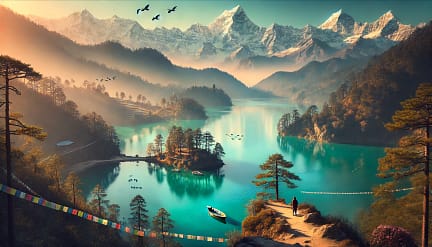
Nestled in the remote embrace of Nepal’s northwestern Himalayas, Rara Lake emerges like a sapphire mirage. This pristine alpine lake, the largest in Nepal, is a sanctuary of stillness where snow-capped peaks mirror themselves in crystalline waters, and ancient forests hum with secrets. Far from the well-trodden trails of Everest and Annapurna, Rara Lake is a whispered legend—a place where time slows, and the raw beauty of nature takes center stage. Join me on a journey to this hidden gem, where adventure meets serenity, and cultural traditions weave into the landscape.
The Journey Begins: Trekking into the Wild
Reaching Rara Lake is an odyssey in itself, a test of spirit rewarded with unparalleled beauty. The adventure starts with a flight from Kathmandu to Nepalgunj, followed by a scenic hop to Talcha Airport—a tiny airstrip clinging to a mountainside. From here, the real trek begins.
For 2–3 days, trails wind through Rara National Park, a protected realm of juniper forests, rhododendron blooms (vibrant in spring), and meadows dotted with wildflowers. The air grows crisper as you ascend to 2,990 meters, where the lake reveals itself like a revelation. Along the way, encounter remote villages like Murma, where terraced fields and wooden homes offer glimpses of agrarian life. The trek is moderate but demands resilience—pack light, but carry curiosity.
Rara Lake: A Mirror of the Himalayas
The first sight of Rara Lake steals your breath. Spanning 10 square kilometers, its waters shift from cobalt blue to emerald green, reflecting the moods of the sky. Surrounding pine and spruce forests echo with birdcalls, while the Himalayas—including Mount Kanjiroba—stand sentinel. Dawn and dusk paint the lake in gold and rose, while nights unveil a celestial spectacle: stars glittering undisturbed by city lights.
Wildlife thrives here. Spot Himalayan black bears, red pandas (elusive but present), and over 200 bird species, including the endangered cheer pheasant. Visit in spring for migratory birds or autumn for clear skies and vibrant foliage.
A Glimpse into Local Life: Culture Untouched
The villages around Rara Lake, like Ghorosingha and Sinja Valley (the medieval capital of the Khas Kingdom), are guardians of traditions. The Thakur community, with their warm smiles, shares stories over cups of chia (butter tea) and dhindo (millet porridge). Time your visit with festivals like Dashain or Tihar to witness rituals, dances, and communal feasts.
Respect is key—ask before photographing, dress modestly, and embrace the slow rhythm of life. Homestays are rare here, so camping under the stars or staying in basic teahouses deepens the connection to the land.
Travel Tips for the Intrepid Explorer
- Best Time to Visit: Spring (March–May) for blooms and birdlife, or autumn (September–November) for crisp skies. Winters are harsh, and monsoons (June–August) make trails slippery.
- Permits: Obtain the Rara National Park entry permit (NPR 3,000 for foreigners) and TIMS card. Arrange through a trekking agency for ease.
- Pack Smart: Layers for shifting weather, sturdy boots, a reusable water filter, and a high-quality sleeping bag. Carry cash—ATMs are nonexistent.
- Leave No Trace: Preserve Rara’s purity. Pack out all waste, and avoid single-use plastics.
Final Thoughts: The Soul of Solitude
Rara Lake is more than a destination; it’s a meditation. Here, the modern world fades, replaced by the rustle of pine needles, the lap of waves, and the warmth of hearths in humble homes. It’s a reminder that some places still exist where nature reigns untouched, and humanity remembers its humility.
As travelers, we’re entrusted with Rara’s fragile beauty. Tread gently, listen deeply, and let this hidden corner of Nepal transform you.
Ready to answer the call of the wild? Rara Lake awaits—not just on a map, but in the heart. 🌿✨
Have questions or stories of your own? Share them below! Let’s keep the spirit of adventure alive.
#HiddenNepal #RaraLakeMagic #WanderlustInTheWild


